Willows have a reputation for being difficult. Partly deserved: they hybridize, leaves vary on the same tree, and several species often grow side by side along a river. But beginners do not need to recognize every willow. Learn a handful of common species by combining three clues—leaf shape and underside, bark and twigs, and growth habit. The trick is to stop hunting for one perfect feature and start building a case. Think like a naturalist: gather evidence from several parts of the plant, at different heights, and from mature growth rather than a single unusual shoot. A lone leaf can mislead you; a combination of features is far more reliable.
Timing matters too. In spring, catkins may be the most obvious feature. In summer, leaves and stipules are available. In winter, you must rely on twigs, buds, bark, and the shape of the tree or shrub. If you can revisit the same willow through the year, identification becomes much easier—and far less mysterious.
Willow leaves are simple and usually alternate, but species differ in width, tooth size, hairiness, and stalk glands. Always sample mature leaves from the middle of a shoot, not tiny basal leaves or vigorous water shoots. Those extreme leaves are often unusually large, narrow, or hairy and can send you toward the wrong species. Look at the whole leaf: length-to-width ratio, edge, tip, base, and stipules—the small leafy bits at the base of the stalk. Then turn it over. The underside is often decisive.
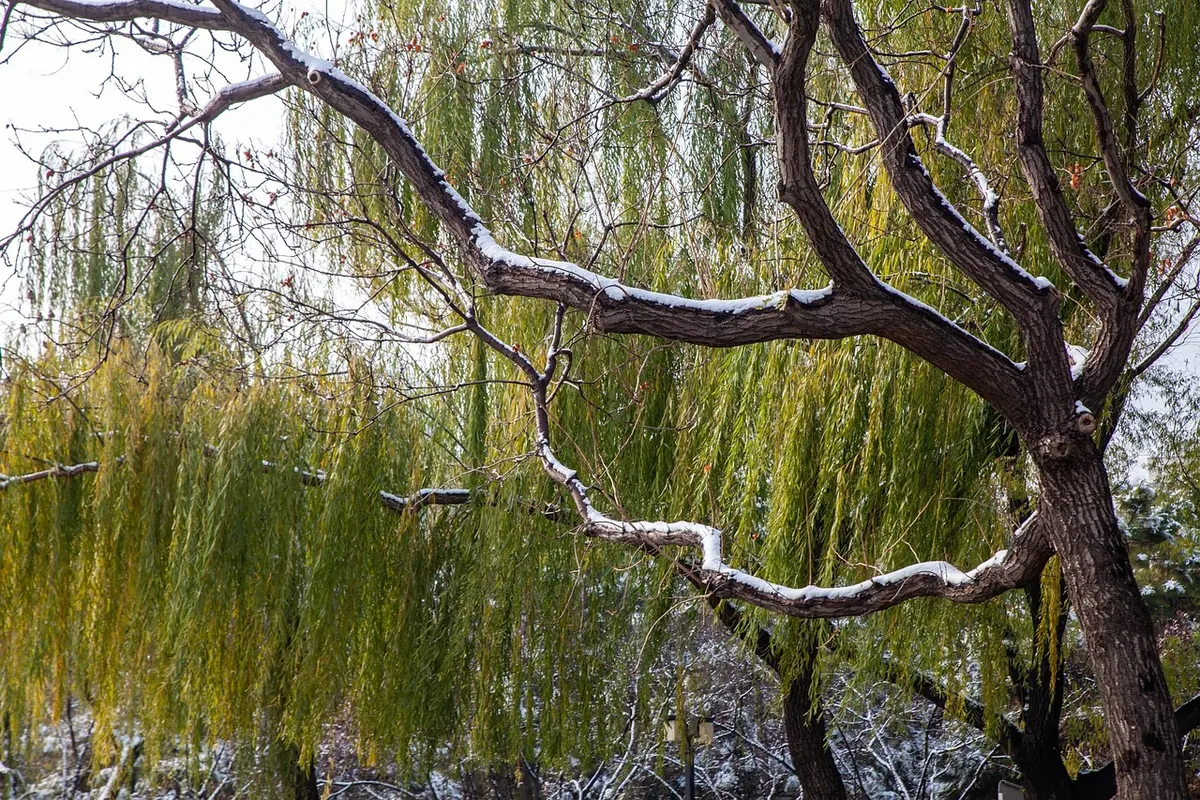
White willow has narrow, finely toothed leaves with a silky grey-green top and a silvery-white underside. Crack willow is similar but glossier and less hairy, with coarser teeth; its leaf stalks often carry small glands. Where the two grow together, they hybridize, so intermediates are common. That is one reason a beginner should not expect every tree to match a field guide exactly. Instead, ask which features are present, which are absent, and how strongly they are expressed. A hand lens helps with tiny glands, fine hairs, and the teeth along the leaf edge.
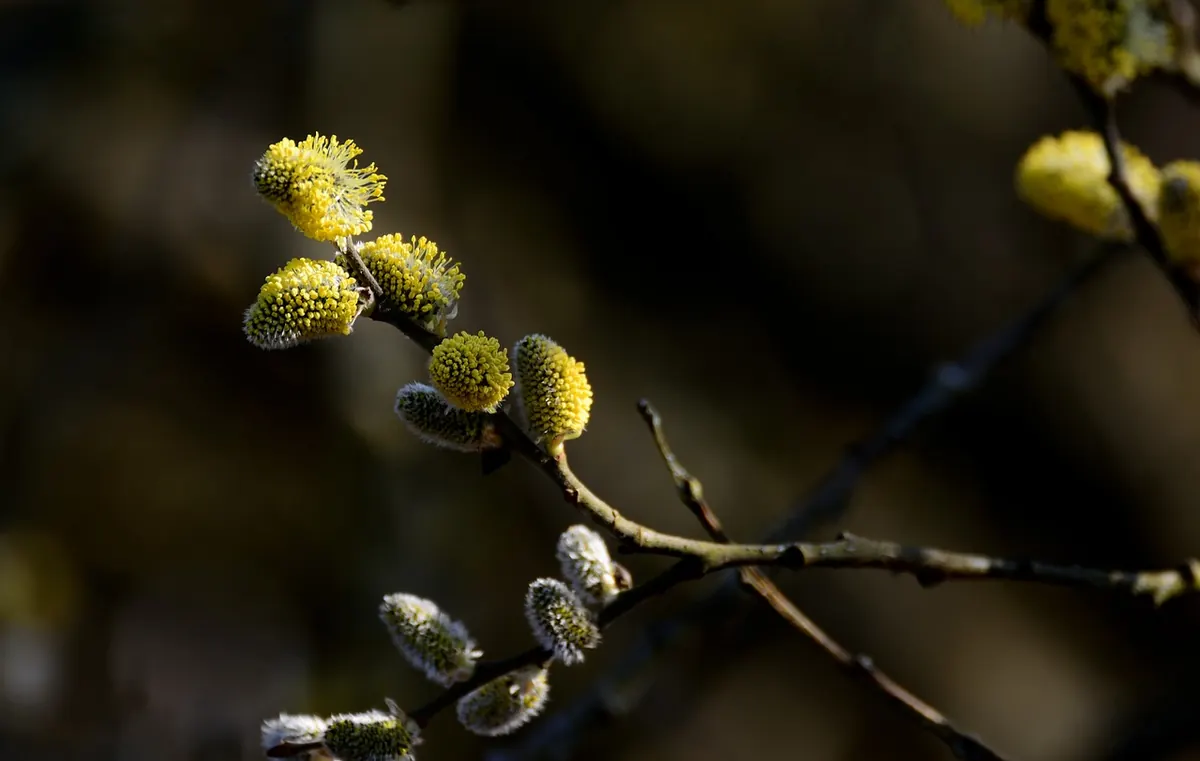
Goat willow leaves are broad, oval, and slightly wavy, dark green above and grey-felted beneath. Large leafy stipules often sit at the base of the stalk, and the twigs are stout with big, grey, furry buds—the “pussy willow” buds many people know. Grey willow is the wetland cousin: narrower leaves, a greyer underside, slimmer twigs, and smaller buds. Both are shrubs or small trees rather than big riverbank trees. Goat willow can look surprisingly variable, especially on vigorous shoots where the leaves become almost rounded, so check several leaves and look for the combination of broad grey-backed leaves and large furry buds. Grey willow is more at home in wet ground, marshes, and damp woods, and its narrower leaves and smaller buds help separate it from goat willow.
Purple willow is useful to learn because its leaves are often opposite or nearly opposite, narrow, blue-green, and fine-toothed; its slender twigs often show purple or red. Opposite leaves are unusual among willows, so that paired arrangement is a strong clue. Osier has very long, narrow leaves—often over 10 cm—with a silvery underside and edges that may roll under. Its flexible twigs have long been used in basketry. Almond-leaved willow has broader, glossy green leaves, obvious teeth, and large stipules that persist; its twigs are reddish-brown. These three are often shrubs in wet ground or osier beds. If a willow has extremely long, narrow, silver-backed leaves, think osier. If the leaves are paired and the twigs are slender and purplish, check purple willow. If the leaves are broader and glossy with prominent stipules, consider almond-leaved willow.
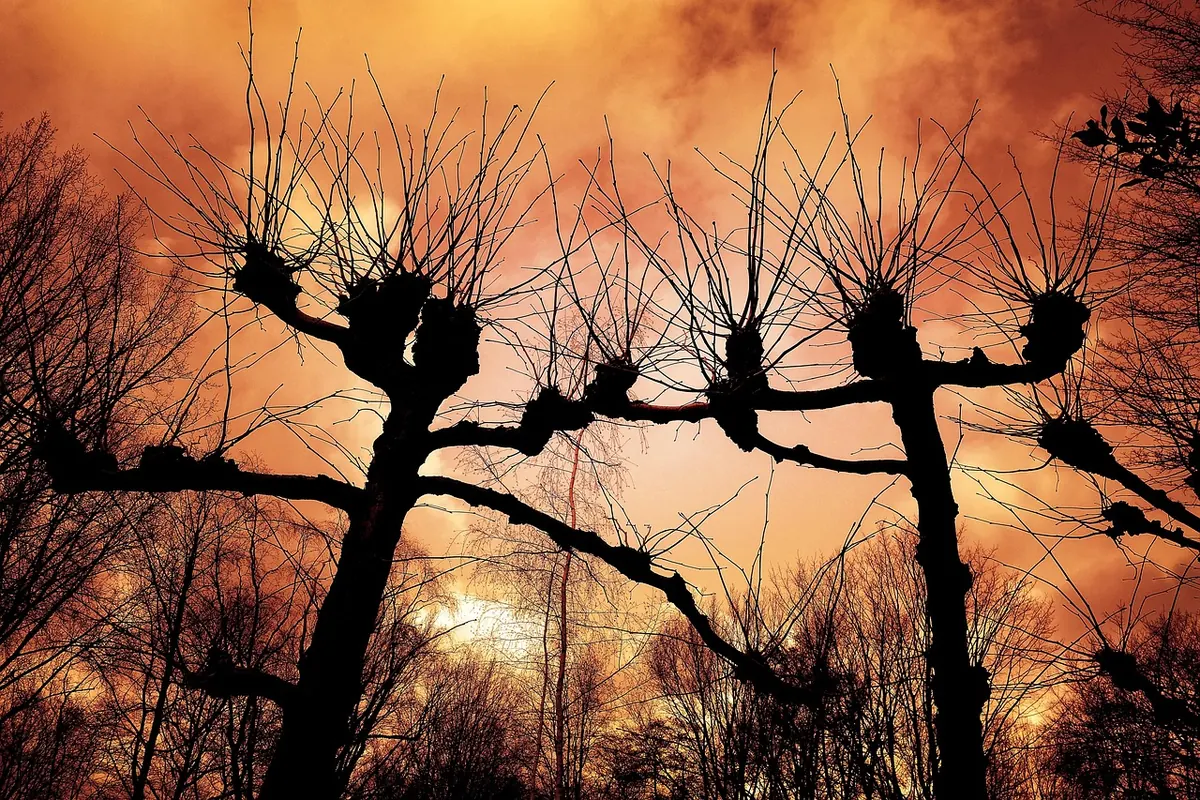
Leaves are not always available, and even in summer they should not carry the whole identification. Bark, twigs, buds, and growth habit provide the second half of the case. Mature willow bark is often grey-brown and fissured or ridged, while young bark is smoother. White willow bark tends to be grey-brown and deeply fissured; crack willow bark is darker and coarsely ridged, and its twigs are famously brittle at the base—hence the name. Goat and grey willows usually remain shrubby or small, with smooth grey-brown bark. Purple, osier, and almond-leaved willows often have slender, flexible twigs in shades of purple, red, or reddish-brown.
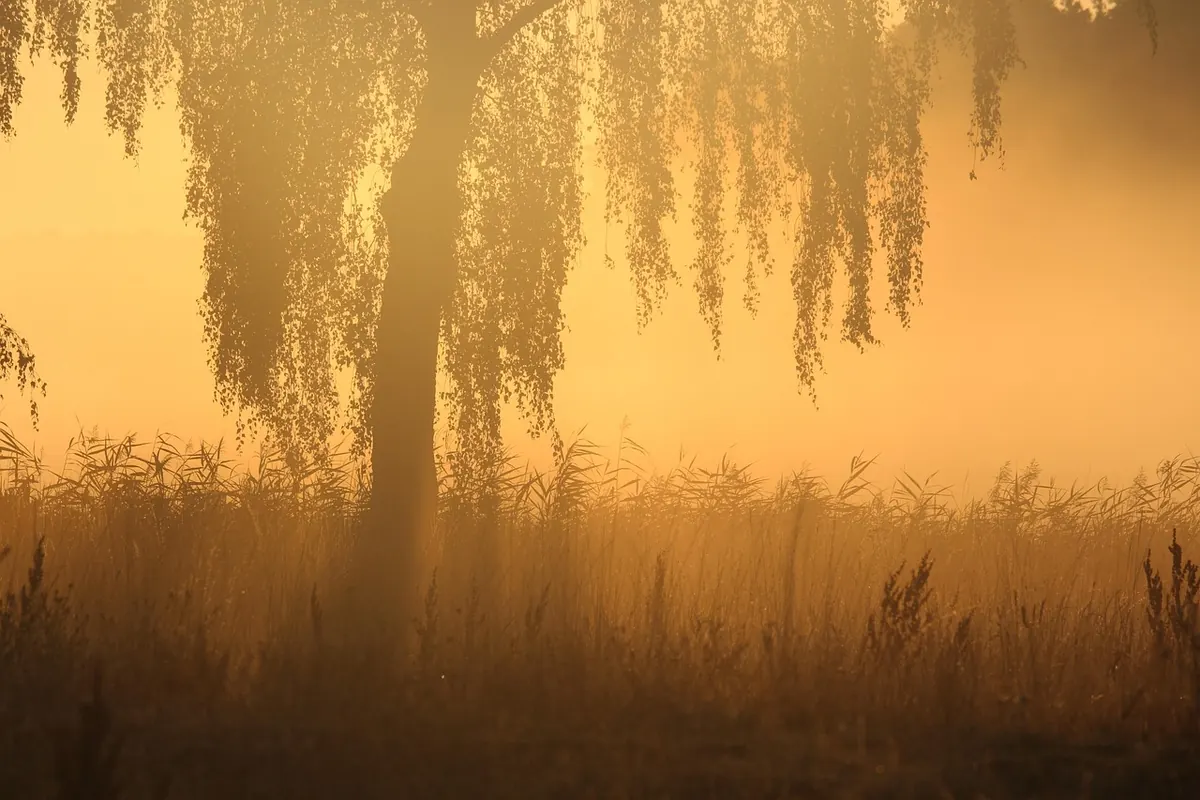
Growth habit is a useful clue, though never proof on its own. White and crack willows are typically large trees along rivers and wet ground, with broad, often irregular crowns. Goat and grey willows are more often shrubs or small trees in damp woods, marshes, and scrub. Purple, osier, and almond-leaved willows are frequently shrubby in wet ground, osier beds, and along streams. Habitat narrows the possibilities, but willows are mobile plants in wet landscapes, and hybrids can turn up almost anywhere.
Field note: a large riverside tree with long, silver-backed leaves and deeply fissured bark is a strong white willow candidate; a shrubby wetland willow with broad grey-backed leaves and big furry buds points toward goat willow.
When you meet an unfamiliar willow, work through a simple routine rather than jumping to a name. This keeps you from being distracted by one striking feature.
Be cautious with hybrids. White willow and crack willow hybridize freely, and other willows cross too, so intermediate trees are part of the landscape rather than rare exceptions. Do not identify a willow from a single water shoot, a tiny basal leaf, or leaf color alone. Instead, sample several mature leaves from the same shoot, photograph the leaf top and underside, and record the twig, bud, bark, and whole plant shape. If you are still unsure, write down the combination of features you observed. A beginner’s goal is not to name every willow perfectly; it is to recognize the common ones with confidence and to build a habit of careful observation.
Photo: Petrick_L / Pixabay