Golden hour is generous, but it is not indiscriminate. It flatters plants with fine texture, translucent leaves and a bit of height, and it does very little for a clipped box ball. Willows, luckily, are built for it. Their leaves are narrow and semi-transparent, their branches hang in long flexible curtains, and several species carry young stems in yellow, coral or deep purple that seem to hold light inside them. Plant one in the right spot and your garden gains a feature that changes character every evening.
What follows is a working list: the willows that photograph best in warm, low-angle light, where to put them so the sun does the work, and how to keep them looking good enough to point a camera at. It assumes a real garden, not a estate park, so there are options here for a modest plot as well as a long lawn.
Three things happen when the sun drops low. Light travels through more atmosphere, softening and warming it. It also arrives at a shallow angle, so it skims across surfaces rather than hitting them flat. And it comes from behind your subject if you position yourself properly, which is what turns ordinary foliage into a glowing screen.
Willow leaves are almost purpose-built for that last effect. They are thin, narrow and arranged loosely along the shoot, so backlit light passes through them instead of being blocked. A single leaf looks unremarkable at noon. A thousand of them, seen against a low sun, look like stained glass. Add the way willow branches move — even a light breeze sets a whole canopy swinging — and you get constant small changes in how the light catches and releases.
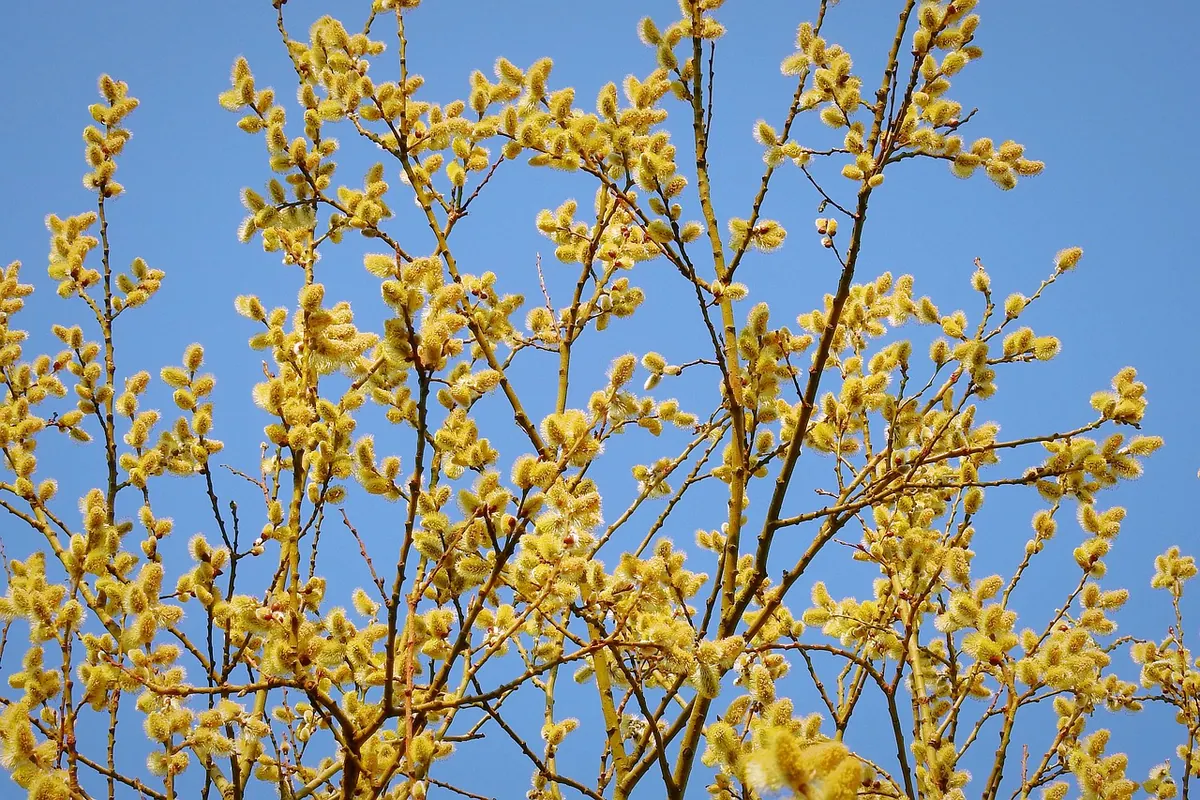
The bark matters too. On white willow and its coloured-stem relatives, the young growth in winter and early spring is glossy yellow, orange or red. In raking light those stems read almost as if they were lit from within, which is why a coppiced willow patch can be more photogenic in February than many gardens are in June.
The classic. Long arching branches sweeping almost to the ground, fine leaves and a silhouette that reads clearly against a bright sky. It is also large — mature trees can exceed fifteen metres — and thirsty, so it wants space and a spot well away from drains, foundations and boundaries. Given that, few trees photograph better: stand so the setting sun sits behind the curtain of branches and the whole tree becomes a soft gold screen. Naming is muddled in the trade, so look for Salix alba 'Tristis' or the closely related Salix × sepulcralis 'Chrysocoma'.
Ordinary white willow is a big riverside tree, but its cultivars are the photographer's friends. 'Vitellina' gives brilliant yellow young stems; 'Britzensis' gives orange-red. Cut them back hard every year or two and you get a dense crop of whippy coloured rods at eye level instead of a tall canopy overhead — ideal for backlighting, and useful in a garden of almost any size if you treat them as a coppice stool rather than a tree.
Salix alba var. sericea has silvery-grey foliage with a soft sheen. In flat midday light it can look dull; in side light it lifts, because the fine hairs on the leaves catch the sun at a low angle and scatter it. Plant it where evening light comes across the garden rather than from behind the tree, and you get that shimmer without needing a full silhouette.
Twisted stems and curled leaves give this one a graphic quality, and it is at its best in winter and early spring, when bare contorted branches catch low sun. It is often sold as Salix matsudana 'Tortuosa' and is a manageable size for a small garden, especially if kept pruned.
Salix purpurea carries narrow blue-green leaves on purplish stems, and the dwarf form 'Nana' stays compact enough for a border or a large container. It is the easiest willow to work into a small garden, and its fine texture backlights beautifully at close range.
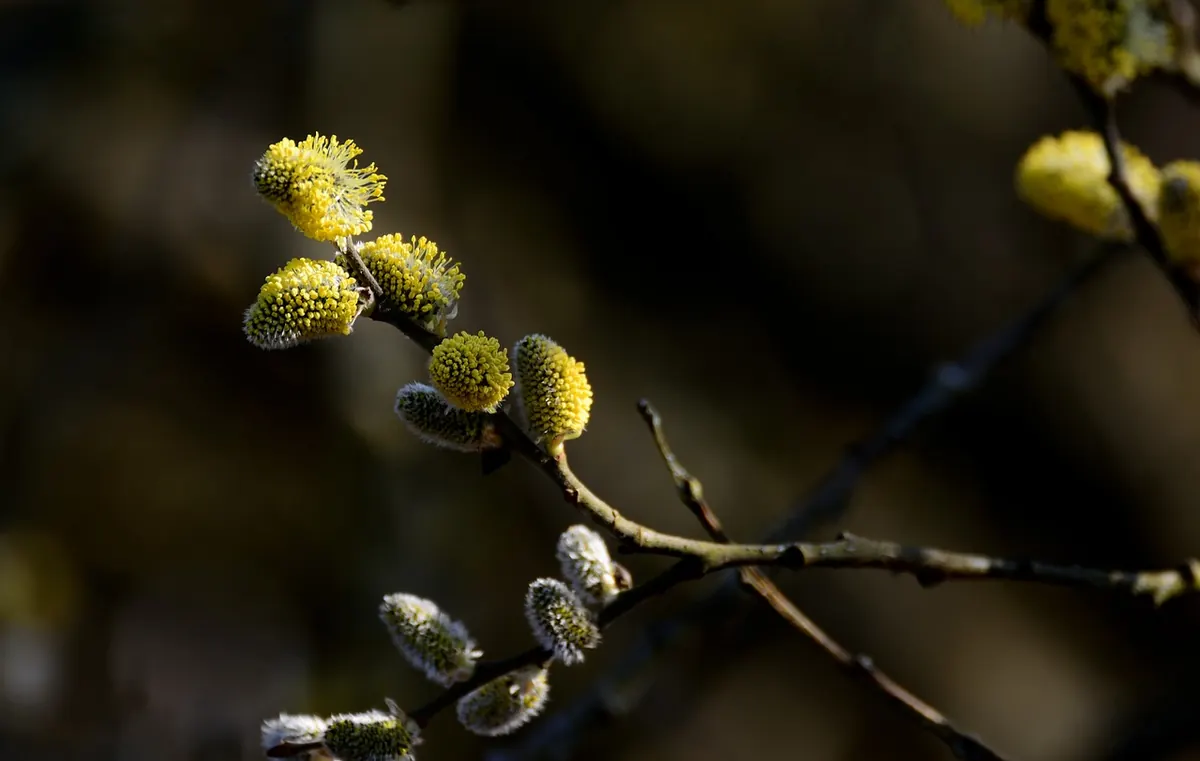
Goat willow and its American cousin, Salix discolor, earn their place for a short season: fat silver catkins in early spring, glowing with a halo of light when the sun is behind them. A single branch cut and held up against a low sun is one of the simplest photographs in the garden.
Salix repens and similar ground-hugging types stay low and spread, which makes them useful foreground material. Get down at their level with the sun in front of you and you have a textured carpet with the light running along it.
Quick way to choose:
Most disappointing willow photographs are a siting problem, not a plant problem. Before you buy anything, spend a few evenings noting where the sun actually sets across the year — it shifts a long way between June and December, and the gap between a shed and a hedge in midsummer may be solid shade by September.
You want the tree's main viewing side to face west or south-west, with something dark behind it. A backlit willow against a bright empty sky is a silhouette and little more; the same tree in front of a dark hedge, a shed wall or a bank of evergreens shows the leaf colour glowing against contrast. Leave at least three or four metres between the tree and your likely camera position, more for a weeping willow, so you can step back and use a longer lens.
Water is worth planning for. A pond, a dark paved area or even a wide saucer of standing water after rain will pick up the low sun and give you a second light source under the branches. And be honest about roots: willows are vigorous, thirsty and shallow-rooted, so keep them well clear of drains, septic systems, patios and foundations.
Willows give you shapes that other trees do not. Use them:
Golden hour is not a fixed length. In summer, especially at higher latitudes, the sun sets at a shallow angle and the warm light lingers; in winter it arrives and leaves quickly, and you may have fifteen usable minutes. Check a sun-position app or simply watch the garden for a week and note when the light turns.
Thin haze and high cloud extend the glow and soften shadows, which usually suits willow's fine texture better than hard clear sky. Wind is the other variable: willows move constantly, so keep shutter speeds up or accept a little motion blur as part of the character. And remember the seasonal windows — silver catkins in early spring, fresh yellow-green leaf in May, soft autumn colour, and bare coloured stems in winter. The tree is photographable for more of the year than most.
Coloured-stem willows need annual or biennial cutting back in late winter to keep producing bright young rods; skip it and you get dull brown bark and a tree too tall to light properly. Check hedges and stools for nesting birds before you cut, and leave a framework of older stems rather than cutting everything to the ground. Young willows want water in their first two summers. Beyond that, most willows are forgiving — sometimes too forgiving, so keep an eye on self-sown seedlings.
Plant with the evening in mind and the garden gives you something to look at every night, not just something to look after.
Photo: KRiemer / Pixabay