Willows keep their own calendar. Catkins push out on bare twigs long before the calendar agrees that spring has arrived, and the first yellow leaf can appear while the rest of the garden still looks green. Once you stop treating willow care as a single annual chore and start reading the season, the work gets simpler: there is a right week for cutting, a right week for planting, and a handful of mornings each year when the light is worth setting an alarm for.
What follows is a working checklist for the year, written for a temperate climate where willows grow near water and gardens. Local timing shifts—a willow in a cold valley will run two or three weeks behind one by a warm lake—so use these as windows rather than appointments.
Once the leaves are down, a willow shows you its bones. Winter is when you can see crossing branches, storm damage, and the awkward limbs that have been hidden since May. It is also the season for serious cutting, because the tree is dormant and the sap is not running.
Start with the obvious: dead wood, damaged limbs, and anything rubbing against a neighbour. Then step back—really step back, twenty paces—and look before you make a second cut. On a mature tree, remove no more than roughly a quarter of the live growth in one winter. Big structural decisions can be spread over two or three seasons, and the tree will be better for the patience.
Willows bleed sap when cut late, so keep heavy work in the dormant window and avoid drastic cutting while the buds are swelling. Make each cut clean, back to a bud, a side branch, or the trunk. Leave no stubs, and do not top a weeping willow at random heights—remove a whole limb rather than leaving a shortened one hanging over the lawn.
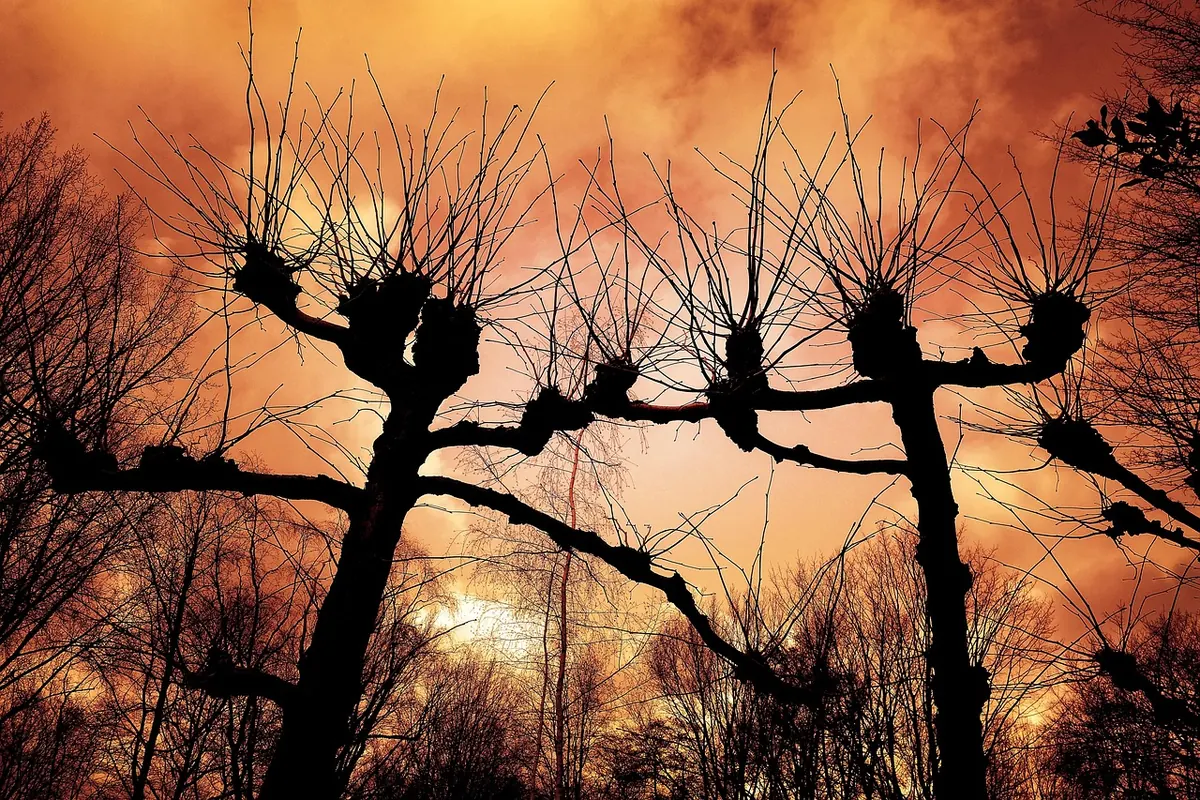
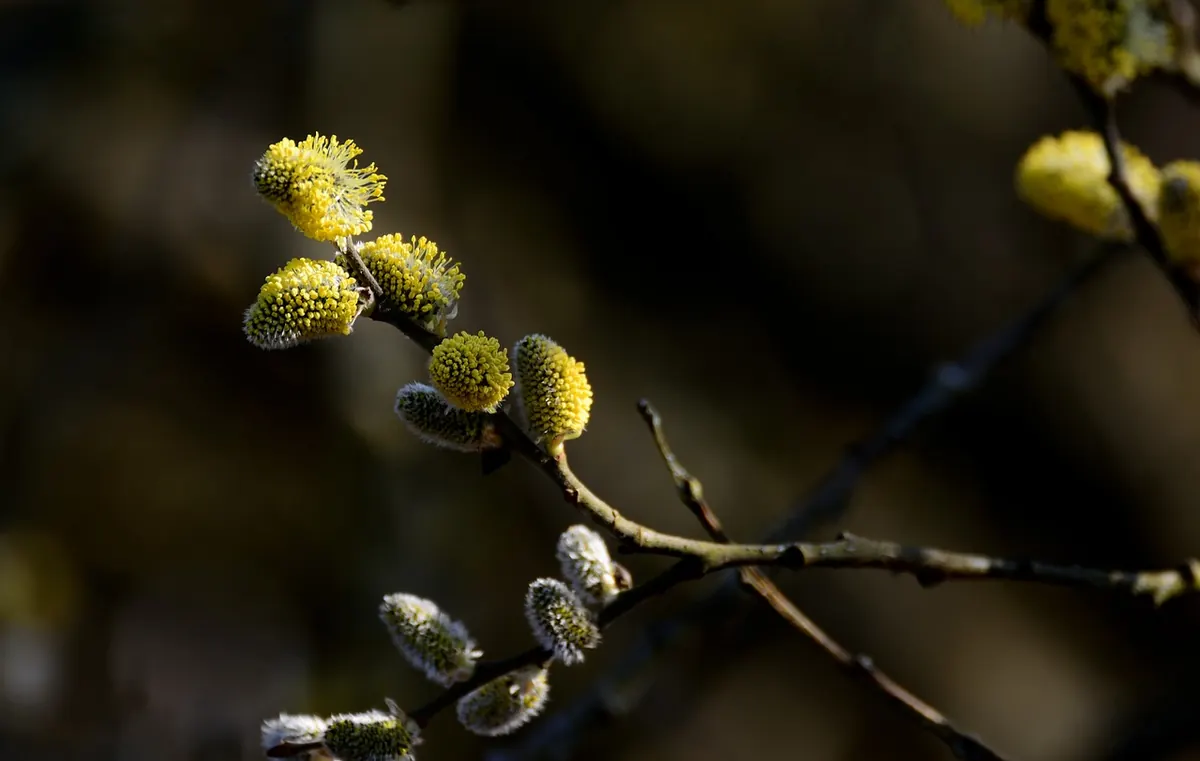
Two exceptions to keep in mind. Pussy willow and other catkin-bearing types flower on last year's growth, so pruning them in winter removes the very thing you planted them for; wait until the catkins have faded. And pollarded willows are cut on a cycle—every few winters, in dormancy, back to the same knuckles rather than to fresh wood further down.
Winter is also the easiest season to photograph a willow, since the shape reads clearly against a pale sky. Frost or hoarfrost on the twigs is worth a dawn trip; once the sun touches the branches, the effect is gone within minutes.
The best planting window for bare-root willows runs from late winter until just before bud break. The soil is workable, the plant is asleep, and roots can settle before the demand for water begins.
Site the tree properly. Willows want sun and moist ground, and their roots are famously good at finding water—which is charming in a wet meadow and less charming near drains, septic systems, foundations, or a boundary wall. Give them generous distance from anything you would rather they did not find, and check local rules before planting close to a property line or watercourse.
For bare-root stock: dig a hole wider than the root spread but no deeper than the roots were growing, spread the roots, backfill in layers, firm gently, and water well. Stake only if the site is windy, and check ties each season. Water through the first two summers, especially in dry spells; a willow that looks established above ground may still be building roots below it.
Willows root from cuttings with almost embarrassing ease. Short lengths of healthy young wood pushed into damp ground in early spring—often called live stakes—will usually take, which makes them useful for holding a bank or filling a wet corner cheaply. Keep the cutting the right way up, and keep it watered while it establishes.
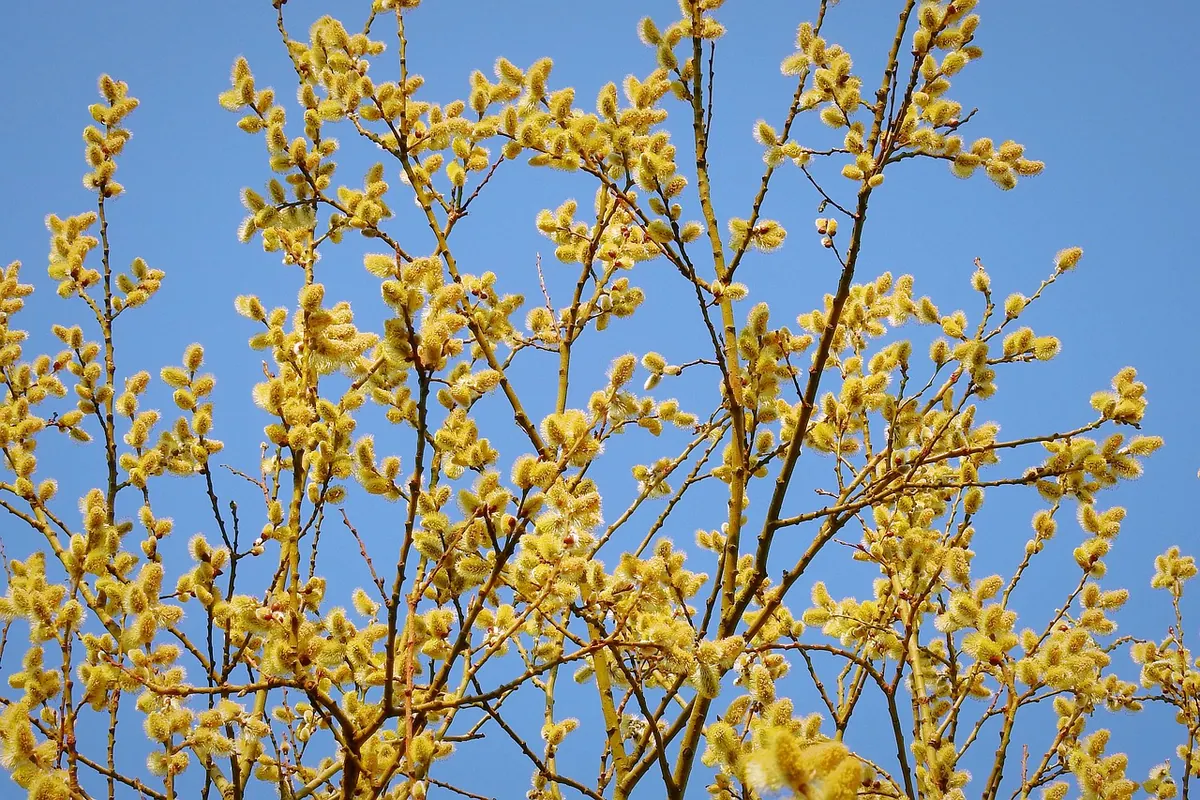
Then watch for the catkins. This is the season's photographic event: soft grey and gold catkins against a still-bare background, best shot backlit on an overcast morning, with a macro lens or a phone held steady and close.
Willows grow fast, and summer is when you notice it. New shoots can add surprising length in a wet June, and a tree that looked balanced in March can look shaggy by August.
Resist the urge to hard-prune now. Light tidying is fine—shortening a few wayward shoots, clearing anything encroaching on a path or roof—but heavy cutting in heat stresses the tree and invites pests to fresh wounds. Save the real work for dormancy.
Water is the summer task. Young willows, and any tree planted in the last three years, need steady moisture through dry spells. A slow soak once a week beats a daily sprinkle. Keep mulch a hand's width away from the trunk, and check the leaves occasionally—curling and sticky residue usually mean aphids, which a firm spray of water often handles.
Wind is the other summer concern. Willow wood is flexible but brittle, and a gusty storm can snap a limb that looked sound. Clear storm damage promptly with a clean cut rather than leaving a torn stub.
For photographs, summer light is difficult: strong, high and green. Work early, before the breeze picks up, and use the tree's own shade. A slow shutter will blur moving foliage—either wait for stillness or lean into the movement and let the leaves streak.
Autumn is the payoff. Willow foliage turns a clear, buttery yellow, often while neighbouring trees are still green, and the leaves drop early enough that you can catch the colour before the first hard frost.
There is little to prune now beyond storm damage. Instead, use the season to assess: photograph the tree from the same two or three positions you used in spring, and next winter's cuts will be obvious.
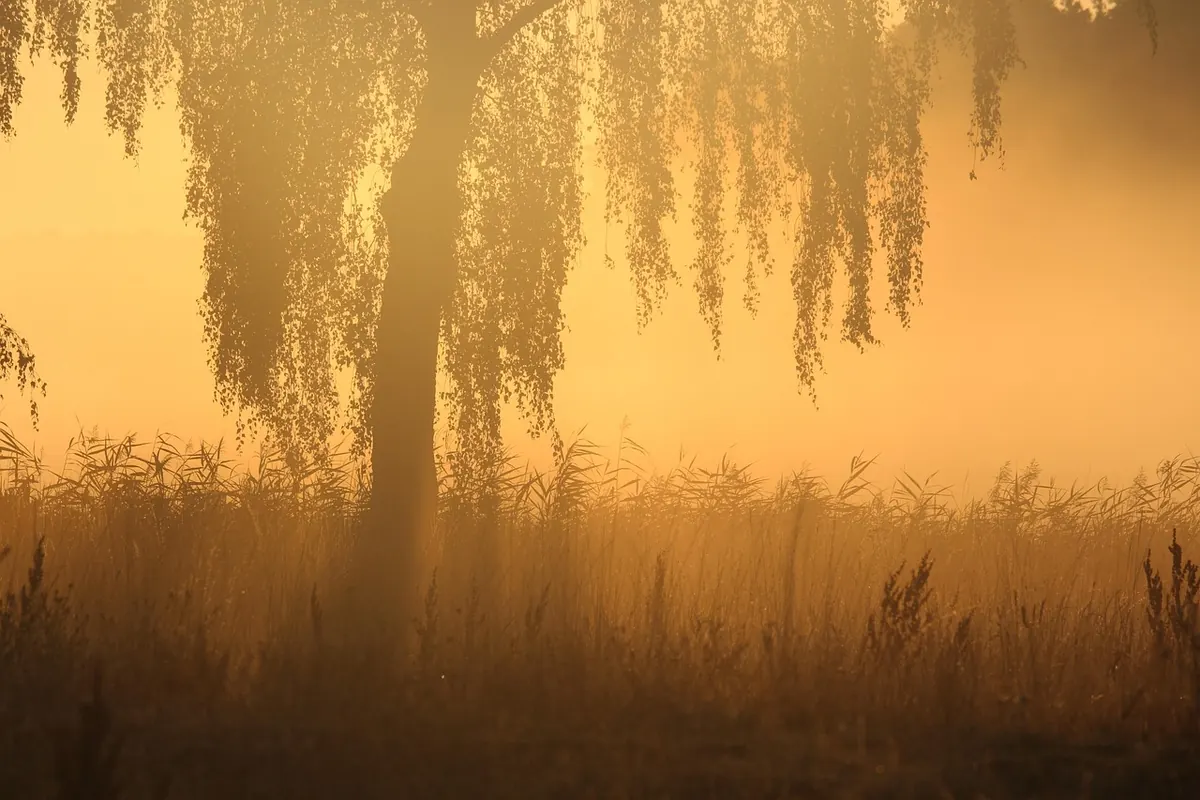
This is also the best season for reflection shots. Find still water—a pond edge, a slow river, even a puddle after rain—and get low, close to the surface. A windless dawn gives you a mirror; a polarising filter lets you decide how much of it to keep. Low sun raking through yellow leaves is the other classic frame, so position yourself with the light behind the foliage and expose for the leaves rather than the sky.
Silhouettes, frost, and long views of bare structure. Shoot into a bright sky and let the branches go dark.
Catkins, new green, and mist over water. Overcast light is your friend; carry something to kneel on.
Shade, dappled light, and reflections of full green canopies. Arrive at sunrise to beat the wind.
Gold leaves, still water, and raking low light. Return three or four times over a fortnight; the colour changes fast.
The most useful thing you can do for a willow is write down what it does. Note the day the catkins open, the week the leaves yellow, the date of the first hard cut. After two or three years you will have a calendar tuned to your own patch of ground, which beats any general guide—including this one.
For large, old, or awkwardly placed trees, especially those near buildings, drains or a boundary, it is worth paying a certified arborist for an assessment before you start cutting. And photograph the same view every season: nothing teaches you a tree's shape faster than seeing it change in a stack of images.
Photo: congerdesign / Pixabay